
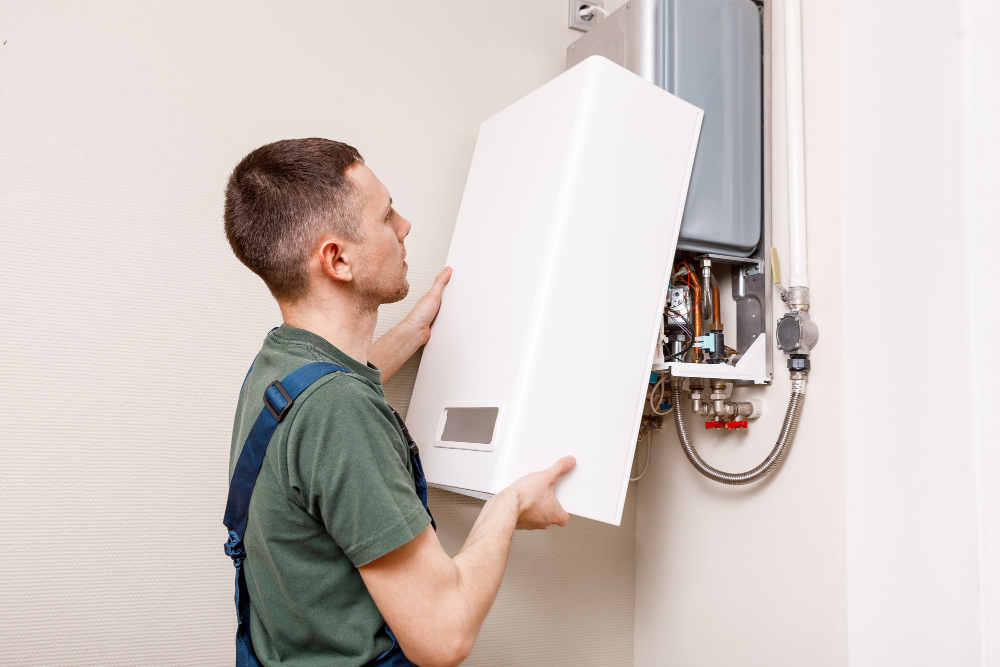
Key Takeaway: A tankless water heater saves money by heating water only when you need it, reducing wasted energy, lasting longer than a traditional tank, and cutting down on maintenance and repair costs. In natural-gas homes across Hobbs, Lovington, Carlsbad, Seminole, and Denver City, a properly sized and professionally installed tankless system from Master Plumbers can deliver long-term tankless water heater savings while still providing endless hot water.
If you’ve ever opened your gas bill and wondered why heating water costs so much, you’re not alone. Water heating is one of the biggest energy loads in most homes. That’s why more families in southeastern New Mexico and West Texas are asking a simple question: How does a tankless water heater save money? And just as importantly, which system makes the most sense for their home and budget?
The short answer: traditional tanks keep 40–50 gallons of water hot all day long, even when no one is using it. That “standby” heating wastes fuel. A tankless (or on-demand) water heater fires up only when you turn on the tap, so you’re not paying to heat water you never use. Over time, that difference in efficiency, plus a longer lifespan and fewer repairs, can add up to serious savings. Local pros at Master Plumbers help homeowners compare options and choose the setup that delivers the best balance of comfort and cost.
Quick Facts: Tankless Water Heater Savings
- Tankless units heat water only when you open a tap, eliminating most standby heat loss common with storage tanks.
- A field study from the Center for Energy and Environment found that natural gas tankless heaters can deliver real-world energy savings compared to standard tanks in many homes.
- According to the U.S. Department of Energy’s guidance on tankless or demand-type water heaters, high-efficiency models can use significantly less energy than conventional storage heaters, depending on usage and installation.
- Many tankless systems are designed to last 18–20 years or more—often nearly twice as long as a typical tank heater.
- In hard-water regions like Hobbs, Carlsbad, Seminole, and Denver City, pairing a tankless heater with a water softener helps prevent scale, reduces descaling costs, and protects efficiency over time.
Across Hobbs, Lovington, and Carlsbad, NM, and into Seminole and Denver City, TX, most homes rely on natural gas and deal with naturally hard water. The licensed plumbers at Master Plumbers install and service energy-efficient water heaters every week—helping homeowners choose the right tankless system, size it correctly, and keep it running efficiently in real West Texas and southeast New Mexico conditions.
How Does a Tankless Water Heater Actually Save Money?
To understand tankless water heater savings, it helps to compare how tankless and traditional heaters work—and why that difference matters on your bill.
A standard tank heater:
- Stores 30–50+ gallons of hot water
- Heats and reheats that water all day to maintain temperature
- Loses heat through the tank walls (standby loss), even when no fixtures are running
A tankless water heater:
- Sits idle until you open a hot-water tap
- Uses a powerful burner or heating element to warm water as it flows through the unit
- Shuts off when you close the tap—no large tank of water to keep hot
Because it doesn’t constantly maintain a tank of hot water, a tankless unit can avoid a lot of wasted fuel. Independent research and federal efficiency guidance, including the U.S. Department of Energy’s overview of demand-type water heaters, note that high-efficiency tankless systems can use substantially less energy than standard storage heaters, especially in homes that don’t use very large volumes of hot water. Over hundreds of showers, laundry cycles, and sinkfuls of dishes, that lower fuel use shows up as lower monthly bills.
If you want to dig deeper into how on-demand systems work, Master Plumbers also covers the technology in their blog on discovering the mechanics and benefits of tankless water heaters, including details about burners, flow sensors, and venting.
Do Tankless Water Heaters Really Lower Energy Bills?
In most homes, yes—especially if you’re replacing an older, less efficient tank.
Real-world testing of natural gas tankless water heaters, such as a study by the Center for Energy and Environment on the actual savings and performance of natural gas tankless units, has shown measurable energy reductions compared with conventional tanks. The exact percentage depends on how much hot water the household uses, but families who use moderate amounts of hot water throughout the day (rather than one huge spike) tend to see the biggest benefit.
Trade publications that track plumbing and mechanical trends, like Plumbing & Mechanical Magazine, report that rising utility costs and higher efficiency standards are a big reason more homeowners are switching to tankless systems. Professional groups such as the American Society of Plumbing Engineers also highlight in their “Tankless Truth” article that, when properly installed, tankless water heaters can be both efficient and affordable over their lifespan.
When your heater only runs while you’re actually using hot water, you’re not paying to keep dozens of gallons hot while you’re at work, asleep, or out of town. If your home in Hobbs, Lovington, Carlsbad, Seminole, or Denver City currently has an older tank heater, a tankless upgrade installed by Master Plumbers can be a direct way to cut wasted energy—especially if you already have natural gas service and regular hot water use.
How Does a Longer Lifespan Reduce Your Total Costs?
Monthly energy savings are only part of the story. Tankless water heaters are built to last longer than most tank-type heaters, which also helps your budget.
Traditional tanks typically need to be replaced every 8–12 years, often because the tank itself corrodes and begins to leak. Tankless units have no large storage tank under constant pressure, and many of their components are designed to be serviced or replaced individually. Industry sources commonly cite service lives of 18–20 years or more for well-maintained tankless models.
That extra decade (or more) of service means:
- Fewer full system replacements over the life of your home
- Fewer installation labor charges
- Less disruption—no scrambling to replace a leaking tank
When you spread your investment over nearly twice the years of service, the total cost of ownership often compares very favorably to standard tank heaters, even if the initial price of a tankless unit is higher. For homeowners who have already dealt with leaks or recurring issues, Master Plumbers’ article on common water heater problems and solutions offers a helpful comparison of what tank-style systems typically run into as they age.
What About Maintenance, Hard Water, and Descaling?
Tankless water heaters still need basic maintenance, but it’s different from a traditional tank—and in hard-water areas like southeastern New Mexico and West Texas, that maintenance is especially important.
Because tankless units heat water as it flows across the heat exchanger, calcium and magnesium from hard water can leave mineral scale on those surfaces. Over time, that scale can reduce efficiency and flow. Most manufacturers recommend periodic descaling (often annually in hard-water regions) to flush out deposits and protect the unit.
Pairing a tankless heater with a whole-home water softener is strongly recommended in hard-water areas like Hobbs, Carlsbad, Seminole, and Denver City. A softener:
- Reduces the hardness that causes scale on the heat exchanger
- Helps maintain efficiency between descaling visits
- Can extend the life of the tankless unit and other plumbing fixtures
So while tankless systems do need routine descaling, especially without softening, combining a tankless water heater with a properly sized softener is one of the best ways to protect your investment and keep operating costs low. A local plumbing professional like the experts at Master Plumbers can test your water, recommend a softener, and set a maintenance schedule based on your exact hardness levels.
How Else Does a Tankless Water Heater Save You Money?
Beyond energy and lifespan, several practical advantages of tankless systems can translate into indirect savings:
- Fewer leak risks: No large tank of stored water means much lower risk of catastrophic tank leaks that can damage floors, walls, and belongings.
- Space savings: Wall-mounted tankless units free up floor space in utility rooms, garages, or closets—valuable in many homes.
- Stable performance: When correctly sized, tankless heaters deliver continuous hot water for back-to-back showers, laundry, and dishes—without the need for a giant storage tank or juggling your family’s schedule.
- Potential resale appeal: Many buyers appreciate energy-efficient upgrades and the promise of “endless hot water,” which can make a home more attractive on the market.
For homeowners planning to stay in their home for several years, these day-to-day advantages—paired with long-term energy and maintenance savings—often make a tankless system a smart financial choice. A consultation with Master Plumbers’ tankless specialists can help you weigh these benefits against your current setup.
Tankless Water Heater Savings – Frequently Asked Questions
Here are some of the most common questions homeowners in Hobbs, Lovington, Carlsbad, Seminole, and Denver City ask when they’re considering a tankless water heater.
How soon will I notice savings from a tankless water heater?
Are tankless water heaters really more energy-efficient?
Do I need a water softener with a tankless water heater?
Will a tankless water heater work for a large family?
How much maintenance does a tankless system need?
Is a tankless water heater worth the higher upfront cost?
Ready to Learn More About Energy-Efficient Hot Water?
A tankless water heater isn’t just a trendy upgrade—it’s a practical way to cut wasted energy, reduce surprise repair costs, and enjoy reliable hot water in your Hobbs, Lovington, Carlsbad, Seminole, or Denver City home. When you combine a properly sized tankless unit with a water softener and a simple maintenance plan, you get a system designed for efficiency and built to last.
If you’re curious how much you could save—or whether a tankless system makes sense for your home’s layout and hot water needs—reach out to a trusted local plumbing professional for a no-pressure consultation. They can:
- Review your current water heater and energy use
- Estimate potential tankless water heater savings for your home
- Recommend system sizes, venting, and softening options
- Outline installation costs and timelines so you can make an informed decision
Learn more about energy-efficient water heaters and how they fit into your long-term budget. The licensed team at Master Plumbers is here to help you compare options, understand the numbers, and choose a system that fits your home.
Ready to take the next step? Contact Master Plumbers today to schedule a consultation and start planning a hot water upgrade that can pay you back for years to come.
Further Reading & References
- Plumbing & Mechanical – Demand for Residential Tankless Water Heaters Heats Up
- ASPE Pipeline – Tankless Truth: Tankless Water Heaters Are Affordable to Purchase and Install
- Center for Energy and Environment – Actual Savings and Performance of Natural Gas Tankless Water Heaters
- U.S. Department of Energy – Tankless or Demand-Type Water Heaters